

Online Leak Sealing of Hot Ammonia Separator Flange in a Chemical Plant
In a chemical plant, leakage was observed from the bolted cover / flange region of a Hot Ammonia Separator. The equipment was operating under high-pressure service, with a process gas mixture containing Hydrogen, Nitrogen and Ammonia.
The operating pressure of 150 bar made the leakage a critical maintenance and safety concern. Although the operating temperature was moderate at 40°C, the nature of the process medium made the job highly sensitive. The gas mixture contained approximately 54.85% Hydrogen, 18.235% Nitrogen and 12.959% Ammonia, requiring a carefully controlled sealing operation under strict site safety conditions.
For the plant team, immediate shutdown and dismantling of the flange assembly was not a preferred option due to the production impact and the complexity of isolating high-pressure process equipment. NESL was called upon to carry out an online leak sealing intervention while the equipment remained in service.
The Engineering Challenge
A leak on a high-pressure ammonia separator presents a different level of risk compared with ordinary utility leaks.
The concern was not only the visible loss of process gas. The equipment was handling a hazardous gas mixture containing Hydrogen and Ammonia. Hydrogen introduces flammability concerns, while Ammonia exposure presents a direct personnel-safety and environmental hazard. At 150 bar, even a small leak path can discharge with significant velocity and may worsen if not addressed quickly.
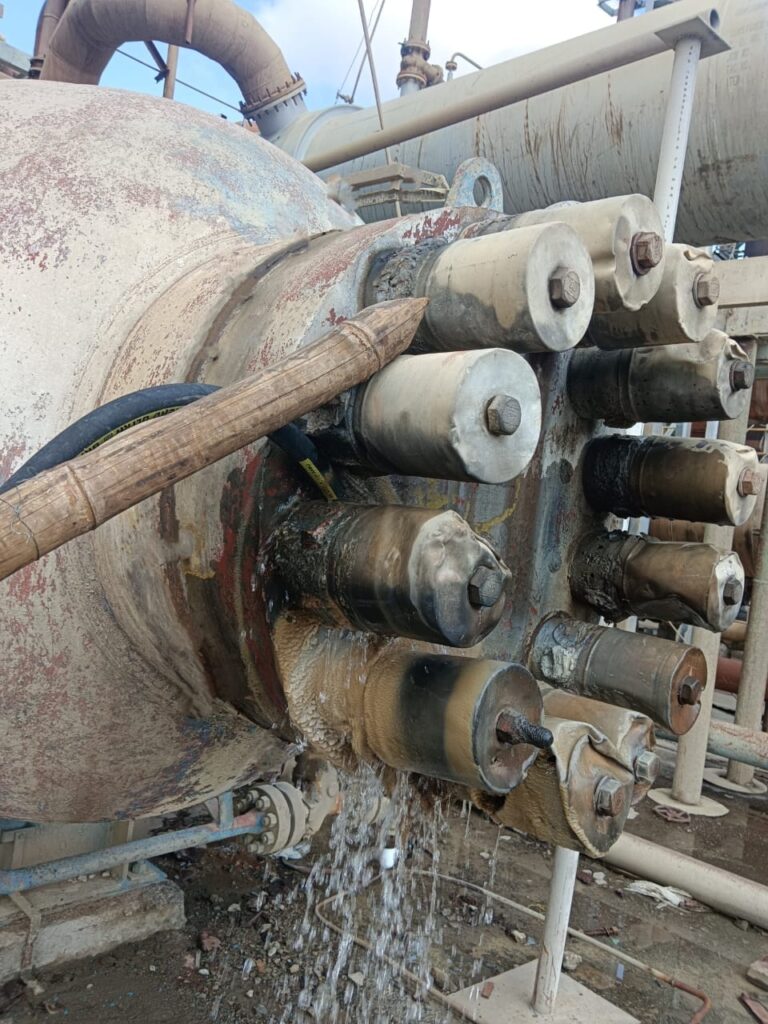
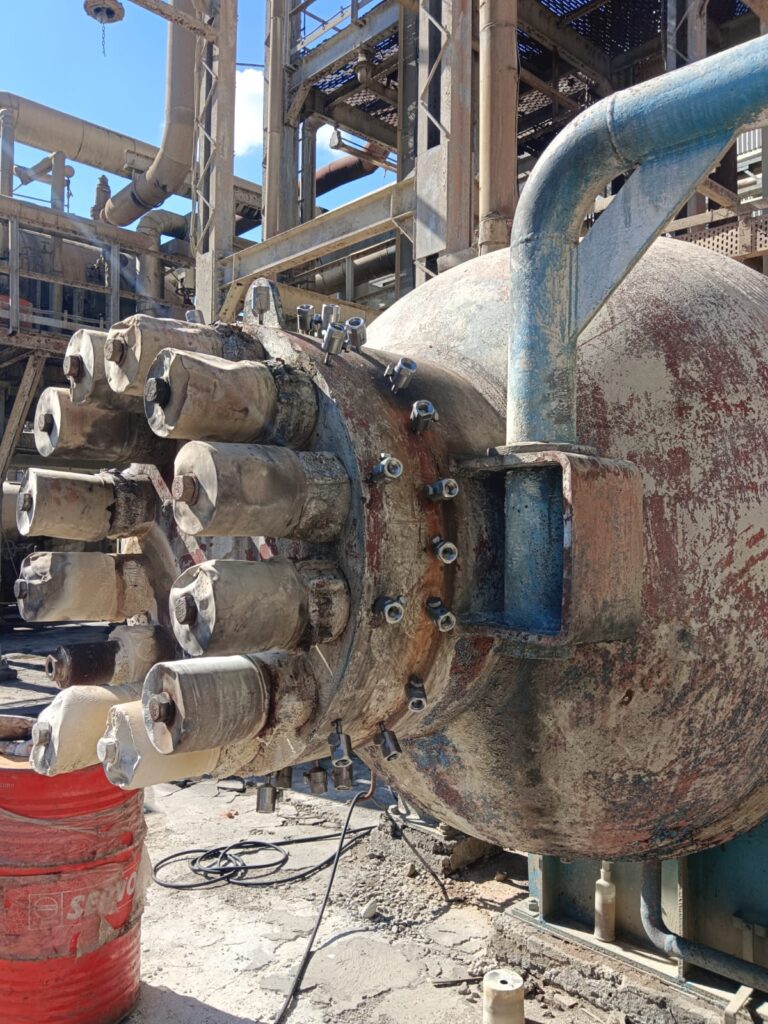
The photographs show a heavily weathered bolted cover area with multiple injection fittings installed around the leakage zone. The sealing arrangement had to consider the existing flange geometry, available access around the cover, bolt layout, leakage path and the need to introduce sealing compound progressively without imposing uncontrolled stress on the joint
The repair therefore required:
– safe execution on pressurised equipment;
– identification of the active leakage path;
– controlled installation of injection points around the flange / cover region;
– selection of a compound compatible with the service and operating conditions;
– gradual injection to avoid sudden pressure imbalance;
– verification that the leak had been arrested before demobilisation.
The Online Leak Sealing Approach
NESL’s service team first assessed the leakage pattern, flange condition and accessibility around the separator cover. Since the equipment was in live service, the intervention had to be planned to maintain containment throughout the operation.
Injection fittings were positioned around the affected region to create a controlled path for introducing the sealing compound into the leakage zone. NES-2B compound was selected for the application based on the service conditions and the nature of the process medium.
The sealing compound was injected in a controlled and sequential manner. Rather than applying excessive force at one point, the compound was progressively introduced through the prepared injection points so that it could migrate into the available leak path and build resistance within the joint cavity.
As the compound occupied the leakage path, the gas discharge was gradually reduced. Injection was continued until the leakage was fully arrested and stable sealing was achieved.
The work was carried out online, without dismantling the equipment and without requiring an immediate shutdown of the plant.
Result
The online leak sealing intervention successfully restored containment at the hot ammonia separator.
Following completion:
– the leakage from the separator cover / flange region was arrested;
– the equipment continued to remain in operation;
– an unplanned shutdown was avoided;
– exposure risk to personnel was reduced;
– loss of process gas was stopped;
– the plant gained time to plan permanent inspection and maintenance during a scheduled shutdown.
Why This Repair Matters
In chemical and fertilizer plants, high-pressure equipment leaks can have consequences far beyond the visible leak point. A leak involving Hydrogen and Ammonia can create safety, environmental, reliability and production risks within a very short time.
This case demonstrates the value of engineered online leak sealing when immediate shutdown is impractical. The sealing compound alone is not the solution. Successful online leak sealing depends on correct assessment of the leak geometry, appropriate compound selection, controlled injection pressure, safe execution practices and experienced field judgement.
For plant maintenance and asset integrity teams, such interventions provide a practical way to regain containment and maintain process continuity until a permanent repair can be planned.
Standards and Engineering Reference
Online leak sealing should be treated as an engineered temporary repair and not as a casual maintenance activity. In such applications, the repair philosophy should consider the principles of ASME PCC-2 for pressure equipment repair, applicable pressure containment requirements, and relevant Indian practices such as BIS IS 18159:2023 for online leak sealing compounds and clamp / enclosure design.
In this case, the repair was executed with due consideration to the live operating condition, process hazard, pressure boundary and sealing compound performance.
