

Online Leak Sealing of a 1-Inch High-Pressure Steam Line in a Refinery
In a refinery, a leak was detected on a 1-inch steam line operating under high-pressure service. The line was carrying steam at 130 bar pressure and 160°C temperature, making the leakage a serious operational and personnel-safety concern.
Although the line size was small, the operating pressure made the situation critical. At 130 bar, even a minor leak can discharge steam at high velocity, creating burn hazards, equipment exposure risks and the possibility of progressive deterioration around the leak point.
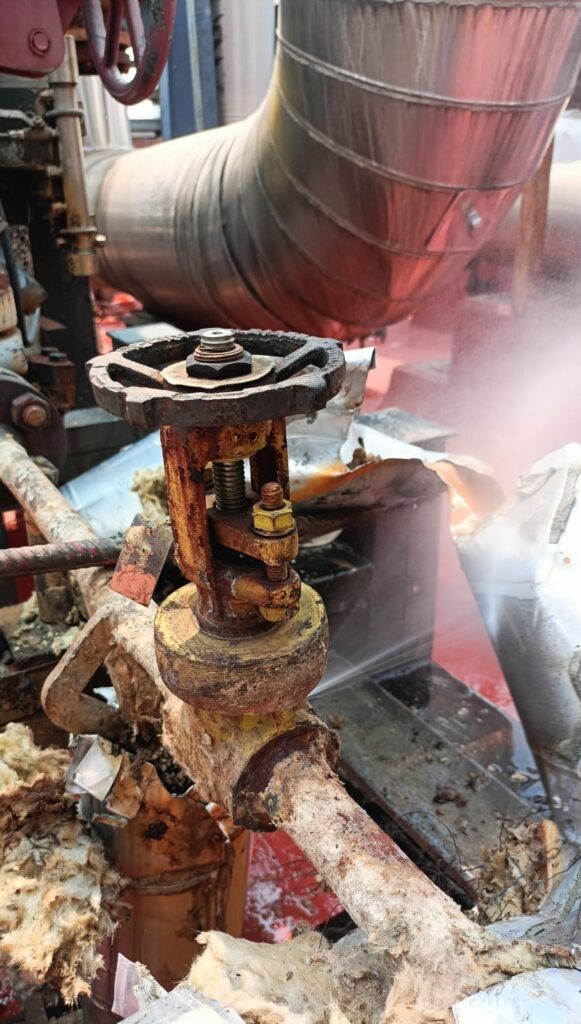
Immediate shutdown and line isolation were not preferred due to the refinery’s operating requirements. The plant required an engineered online leak sealing solution that could arrest the leak safely while maintaining process continuity.
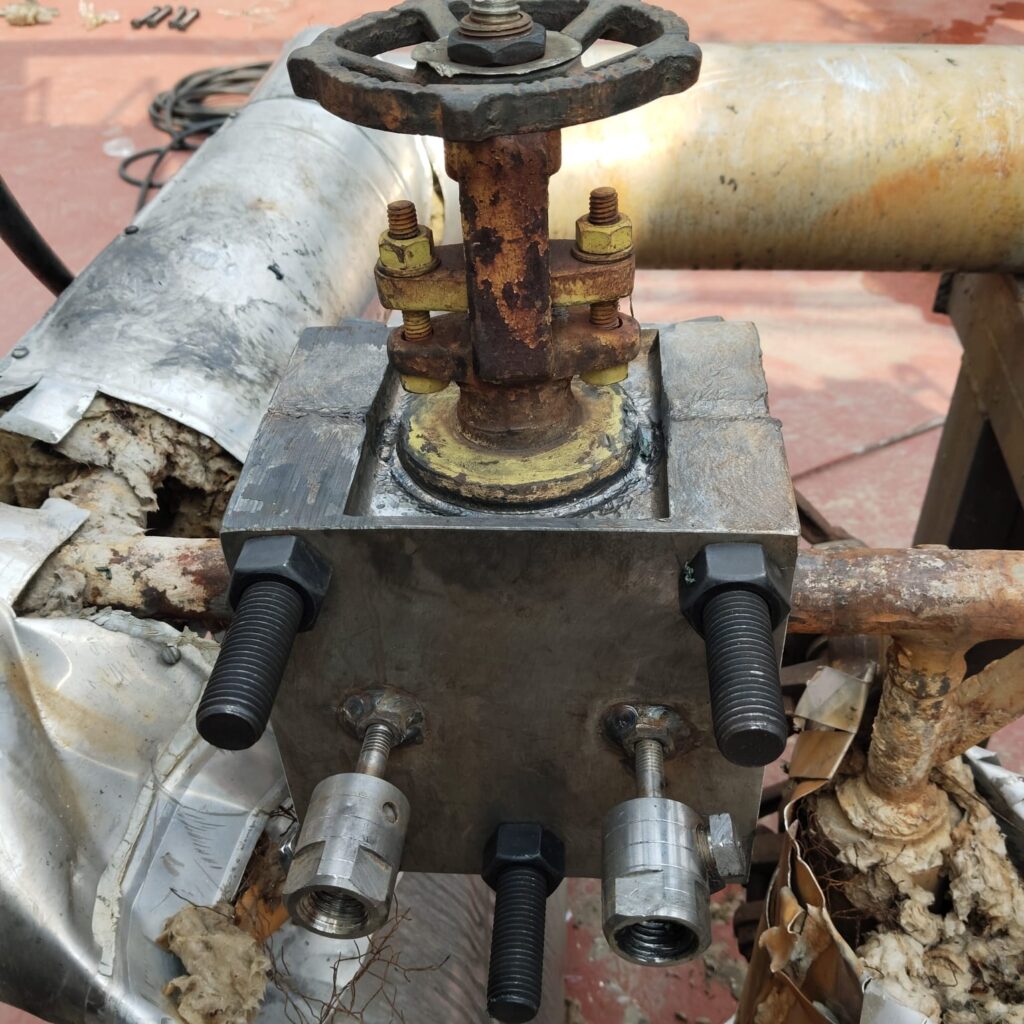
Nicco Engineering Services Limited carried out the repair using a solid box clamp fabricated in its own workshop and NES-2B sealing compound injected under controlled conditions.
The Engineering Challenge
High-pressure steam leaks demand immediate attention because of the risk they pose to personnel, nearby instruments, insulation and adjacent equipment.
In this case, the small line size did not reduce the seriousness of the job. A 1-inch line operating at 130 bar can release steam with considerable force. The repair arrangement had to provide reliable containment while allowing controlled injection of sealing compound into the leakage path.
The key challenges were:
- sealing a high-pressure steam leak without shutdown;
- designing a compact but robust clamp for a 1-inch line;
- ensuring the clamp could withstand injection pressure and service conditions;
- preventing uncontrolled steam escape during installation;
- selecting a suitable compound for the pressure, temperature and service medium;
- completing the work safely within refinery operating constraints.
Clamp Design and Fabrication
A solid box clamp was selected for this high-pressure application. Compared with light-duty enclosure arrangements, a solid box clamp provides a more robust sealing cavity and better mechanical containment for demanding pressure conditions.
The clamp was fabricated in NESL’s own workshop based on the line size, leak location, available access and required injection arrangement. The design allowed the clamp to fully enclose the affected section and create a controlled cavity for compound injection.
For high-pressure applications, the clamp is a critical part of the pressure-containing repair system. It must be suitable not only for the operating pressure and temperature, but also for the additional forces developed during compound injection.
The Online Leak Sealing Approach
After site assessment, the solid box clamp was installed around the leaking portion of the 1-inch steam line. The clamp was secured to establish a controlled sealing cavity around the leak point.
NES-2B sealing compound was then injected through the provided injection point under controlled pressure. The injection was carried out progressively so that the compound could enter the leak path, build resistance and gradually arrest the steam escape.
As the compound occupied the leakage route, the steam discharge reduced and was finally stopped. The work was completed online, without removing the line from service.
Result
The online leak sealing operation successfully arrested the high-pressure steam leak.
Following completion:
- the leakage was stopped;
- the 1-inch steam line remained in service;
- refinery operation continued without interruption;
- personnel exposure to high-pressure steam was reduced;
- an unplanned shutdown was avoided;
- the plant gained time to plan permanent repair during a suitable maintenance window.
Why This Repair Matters
In refinery operations, steam lines support critical heating, tracing and process functions. Even a small-bore line can become a major concern when it operates at high pressure.
This case demonstrates that successful online leak sealing depends on the complete engineered arrangement: site assessment, clamp design, workshop fabrication, compound selection and controlled field execution.
The sealing compound alone is not the solution. For high-pressure service, the clamp must be designed and fabricated to create a reliable containment cavity and withstand the combined service and injection loads.
