

Online Leak Sealing of a Glycol and Steam Flange Leak in a Refinery
A flange joint handling glycol and steam developed a significant leak at a refinery in India. With the service temperature at 180°C and the reported pressure at 18 kg/cm², the escaping hot medium presented a personnel-safety concern and an ongoing source of fluid and thermal-energy loss.
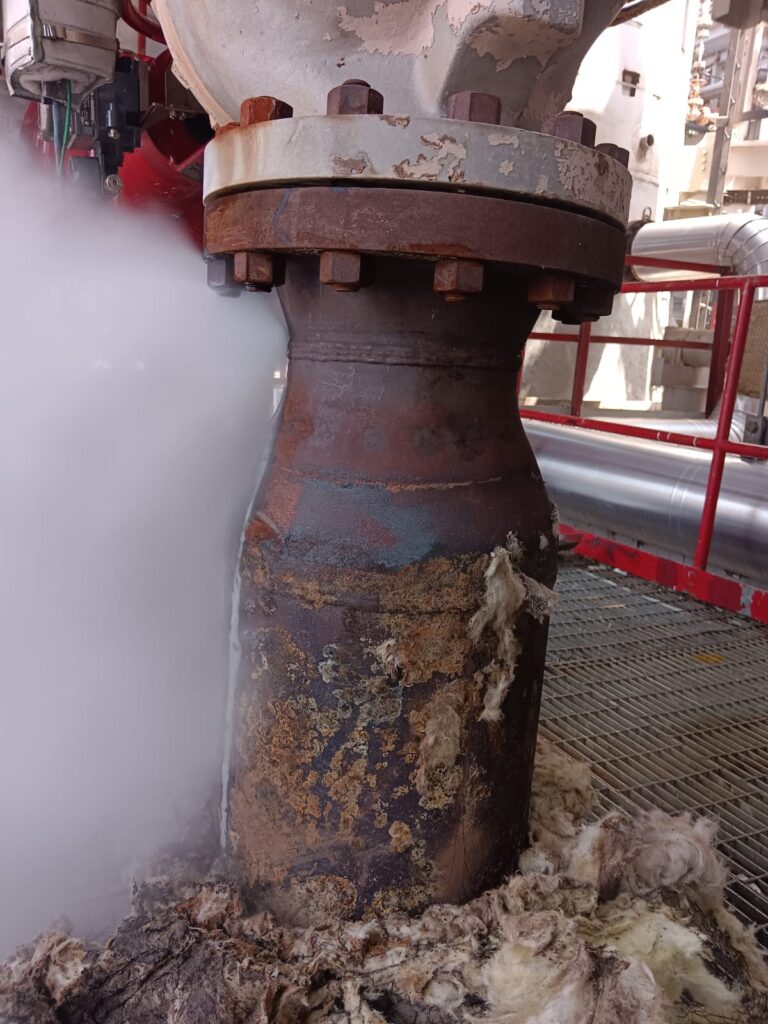
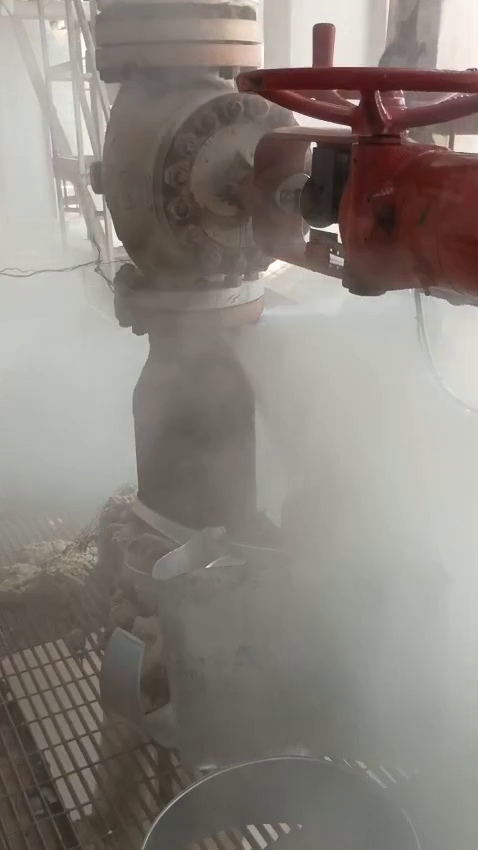
Conventional gasket replacement would have required isolation, depressurisation and opening of the joint. To address the leakage while the equipment remained in service, Nicco Engineering Services Limited (NESL) carried out an online leak sealing intervention using a bespoke box clamp and NES-2B sealing compound.
The Engineering Challenge
The before-repair photograph shows a substantial visible discharge adjacent to the flange joint. At the reported operating temperature, access to the leaking assembly required careful planning to limit personnel exposure during installation and sealing.
The repair arrangement needed to accommodate the flange and adjoining pipe profile, enclose the affected region and provide access for compound injection. The site notes recorded a flange outside diameter of approximately 381 mm and a flange gap of approximately 5 mm.
The principal engineering considerations were:
fitting the enclosure around the existing assembly under live operating conditions;
establishing suitable sealing boundaries around the affected region;
accommodating service pressure, temperature and compound injection loads;
introducing the compound into the sealing cavity without disturbing the existing joint.
For the refinery maintenance team, restoring containment was the immediate priority, alongside limiting the operational disruption associated with taking the equipment out of service.
The Box Clamp Arrangement
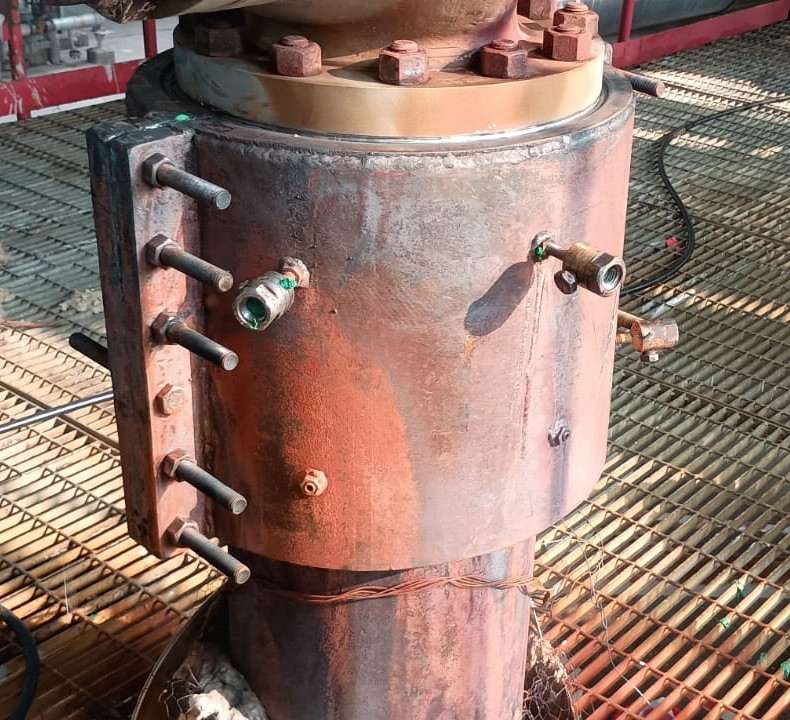
A bespoke split box clamp enclosed the leaking region. The installed arrangement, visible in the after-repair photograph, incorporates bolted longitudinal joints and injection fittings accessible from outside the enclosure.
This configuration allowed the clamp sections to be assembled around the existing equipment. Once secured, the enclosure provided a confined cavity for introducing the sealing compound around the affected region.
The clamp and compound worked together as a sealing system: the enclosure provided mechanical containment, while the injected compound sealed the available leakage paths.
The Online Leak Sealing Approach
NES-2B sealing compound was used for the intervention. With the box clamp installed, the compound was introduced through the injection fittings to establish a seal within the enclosed region. The work was undertaken online, allowing the leakage to be addressed without dismantling the flange assembly. For this type of repair, injection control is essential. Compound placement must remain within the limits established for the enclosure and the existing equipment, with the leakage response assessed throughout the operation.Result
The online leak sealing intervention arrested the leakage from the affected flange region while the equipment remained in service. The intervention:- restored containment of the leaking glycol and steam service;
- reduced personnel exposure to the escaping hot medium;
- curtailed ongoing fluid and thermal-energy losses;
- avoided immediate dismantling of the flange joint;
- provided time to plan inspection and permanent maintenance during a suitable shutdown window.
