

Arresting a High-Temperature Steam Leak at a Severely Corroded Safety Valve Bonnet Flange
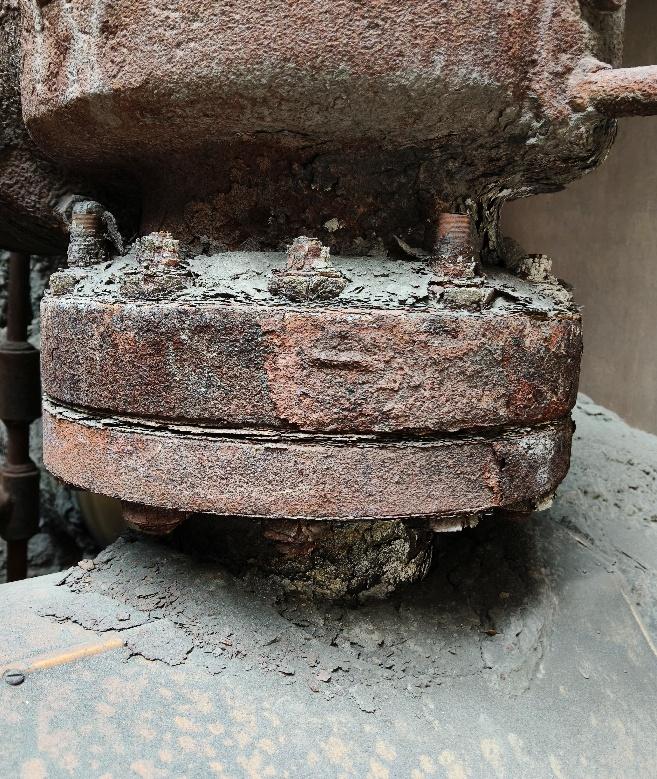
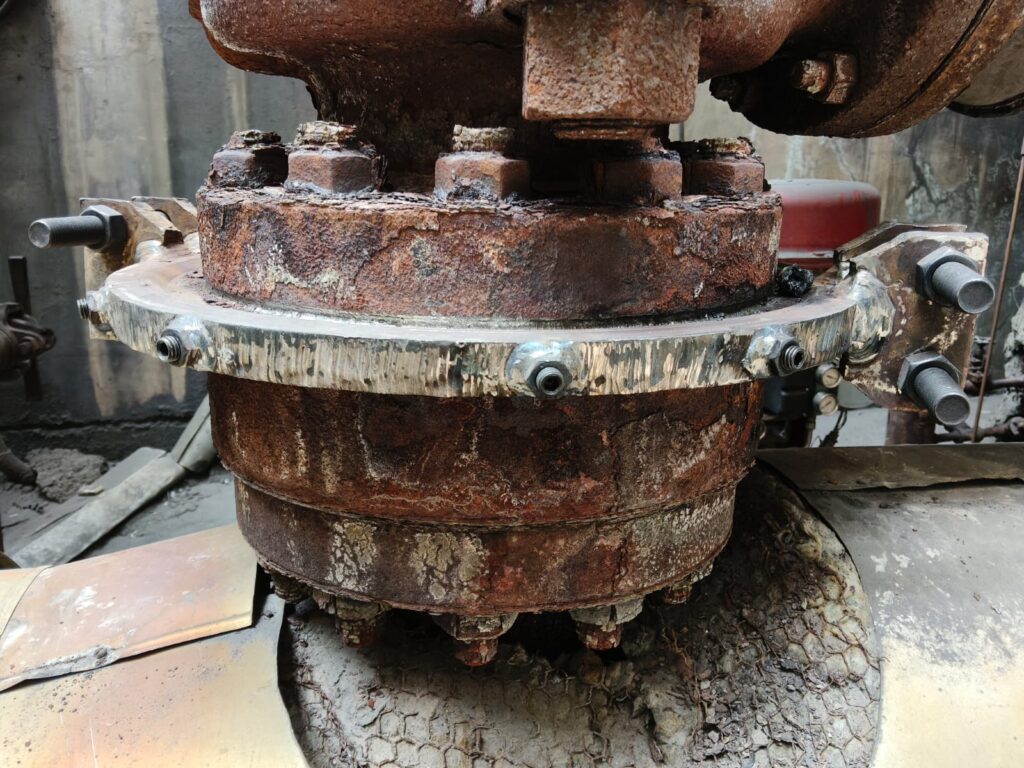
An engineered online leak sealing solution using an in-house designed and fabricated ring clamp and NES–2F high-temperature sealing compound.
In a renowned power plant in India, a severely corroded bonnet flange on a 6-inch safety valve was releasing high-temperature steam and condensate through a circumferential gap exceeding 14 mm. With the system operating at 14 kg/cm² and 350°C, the leakage represented an immediate personnel-safety concern, a significant source of energy loss and a potential trigger for an unplanned shutdown of a critical process unit.
For the plant’s maintenance and asset integrity team, the challenge was not simply to arrest the leakage. It was to find a technically suitable intervention that could address the deteriorated flange joint while preserving process continuity and avoiding the production losses associated with isolating the equipment.
Nicco Engineering Services Limited (NESL) responded with a bespoke online leak sealing solution, combining in-house clamp engineering and fabrication with a high-temperature sealing compound to contain the leakage without a planned process shutdown.
The Challenge: Severe Flange Deterioration Under Live Operating Conditions
The leakage originated at the bonnet flange joint of a 6-inch safety valve. Extensive corrosion had compromised the joint geometry, leaving a circumferential leakage path with a local opening exceeding 14 mm.
Unlike a conventional gasket leak, where controlled bolt tightening or gasket replacement may restore sealing under suitable isolated conditions, this case involved significant deterioration of the flange assembly itself.
The continuous discharge of steam and condensate created several operational concerns:
-
Personnel safety: Exposure to high-temperature steam and condensate presented a serious burn and scalding hazard.
-
Energy losses: Continuous steam escape represented a direct loss of thermal energy and boiler-generated steam, with preliminary estimates indicating losses worth several thousand rupees per hour.
-
Equipment deterioration: Prolonged leakage could accelerate damage to adjacent components, insulation and supporting structures.
-
Production continuity: Conventional flange repair would require equipment isolation and potentially a process interruption, depending on the plant configuration.
-
Escalating maintenance costs: Delaying corrective action could increase the scope and cost of eventual flange refurbishment or replacement.
With the equipment remaining in operation, conventional joint dismantling and gasket replacement were not immediately practical.
The plant therefore required a repair approach that could contain the leakage while avoiding an unscheduled shutdown, subject to engineering assessment and the site’s safety requirements.
Emergency Response and Technical Assessment
Following the emergency request, NESL’s Online Leak Sealing Response Team mobilised and arrived at the plant within a few hours.
The initial site assessment focused on understanding the leak geometry, the operating conditions and the feasibility of installing an external sealing enclosure around the damaged bonnet flange.
Operating and leakage conditions
| Parameter | Site condition |
|---|---|
| Equipment | Safety Valve |
| Nominal valve size | 6 inches |
| Leakage location | Bonnet flange joint |
| Process medium | High-temperature steam and condensate |
| Operating pressure | 14 kg/cm² (approximately 13.7 bar) |
| Operating temperature | 350°C |
| Nature of damage | Severe corrosion and flange deterioration |
| Leakage pattern | Continuous circumferential leakage |
| Local flange gap | Greater than 14 mm |
| Proposed intervention | Bespoke ring clamp with injected sealing compound |
The size of the opening and the deterioration of the existing joint made the repair particularly challenging. An external enclosure had to accommodate the damaged geometry and provide an effective sealing boundary under elevated temperature and pressure.
The assessment also required consideration of the remaining integrity of the existing flange, the mechanical and thermal loads on the proposed enclosure, and the need to preserve the safety valve’s essential operating function.
Based on the site conditions, NESL proposed a custom-engineered ring clamp combined with an appropriate high-temperature sealing compound as the preferred containment methodology, subject to the necessary plant approvals.
NESL’s Engineered Solution: Bespoke Ring Clamp and High-Temperature Sealant
1. Custom Clamp Design and In-House Fabrication
The damaged flange geometry required a purpose-built enclosure rather than a standard off-the-shelf repair clamp.
NESL’s engineering team developed a bespoke ring clamp configured for the bonnet flange assembly and the observed leakage location.
The clamp design considered the operating pressure and temperature, the available installation envelope, the joint geometry, the mechanical loading of the enclosure and the requirements for an effective sealing boundary.
A key advantage was NESL’s in-house capability to design and fabricate custom-engineered clamps at its own workshop.
This integrated engineering and manufacturing capability enabled the proposed sealing arrangement to be tailored to the actual site conditions while reducing dependence on external fabrication vendors—an important consideration during time-sensitive industrial maintenance interventions.
The design approach was informed by established pressure-equipment repair principles, including:
-
BIS IS 18159:2023: Online Leakage Sealing Systems — Code of Practice.
-
ASME PCC-2, Article 306: Mechanical Clamp Repair, covering the engineering considerations applicable to mechanical repair clamps.
-
Applicable ASME pressure-equipment design provisions: Consideration of the relevant construction code and pressure-boundary design requirements for the specific application.
2. Selection of NESL–2F High-Temperature Sealing Compound
NESL selected its proprietary NESL–2F High-Temperature Leak Sealing Compound for the steam-service application.
The compound is specified by NESL for suitable high-temperature applications, with a stated temperature capability of up to 450°C, subject to the applicable product qualification and service limitations.
At an operating temperature of 350°C, the application demanded a sealing material capable of maintaining its intended performance in the presence of steam, elevated temperature and sustained operating pressure.
The selection of the sealing compound was an essential part of the overall repair methodology. The performance of an online sealing arrangement depends not only on the mechanical enclosure but also on the suitability of the sealant for the process conditions and the damaged joint geometry.
3. Controlled Online Sealing Intervention
Following the site safety review and necessary authorisations, the NESL team carried out the online sealing intervention using the purpose-built ring clamp and NES–2F sealing compound.
The repair was undertaken with the objective of establishing an effective containment barrier around the deteriorated bonnet flange without requiring a planned shutdown of the process unit.
The combination of a geometrically matched enclosure and a suitable sealing compound provided an alternative to immediate joint dismantling and gasket replacement.
The principal operational benefit was the ability to address the leakage while preserving plant operation, thereby avoiding the immediate production interruption that could otherwise have accompanied conventional maintenance.
Operational and Commercial Benefits
For plant management, the significance of this intervention extended beyond containing the steam leakage.
Avoidance of an Unplanned Shutdown
By undertaking the intervention online, the plant avoided the immediate need for a planned isolation solely to carry out conventional bonnet flange repair, subject to the continued safe operation of the equipment.
Reduction in Steam and Energy Losses
Containment of the leakage addressed an ongoing source of steam and thermal-energy loss. Preliminary estimates placed the financial impact at several thousand rupees per hour, making timely intervention commercially important.
Reduced Exposure to Escalating Maintenance Costs
Prompt containment reduced continued exposure of nearby equipment and insulation to the escaping steam and condensate, helping limit the potential for secondary deterioration.
Faster Maintenance Response Through In-House Engineering
NESL’s integrated capability for site assessment, bespoke clamp design and workshop fabrication supported a coordinated response to an emergency maintenance requirement.
Improved Shutdown Planning Flexibility
An engineered online intervention can provide the plant with an opportunity to schedule permanent flange refurbishment or replacement during an appropriate maintenance window, rather than allowing the leak alone to dictate an immediate shutdown.
Engineering Perspective: Why This Was Not a Routine Flange Leak
The distinguishing feature of this case was the extent of flange deterioration.
A gap exceeding 14 mm represents a substantially different engineering challenge from minor gasket seepage. It raises questions about the adequacy of the remaining joint, the ability of the proposed enclosure to retain pressure and the compatibility of the repair with the original equipment function.
For online sealing interventions of this nature, established industry practices emphasise the importance of assessing the damaged component, evaluating the suitability of the clamp and sealing system, considering applicable pressure and thermal loads, and establishing an appropriate repair life and follow-up inspection strategy.
ASME PCC-2 provides an internationally recognised technical framework for pressure-equipment repairs, while BIS IS 18159:2023 specifically addresses online leakage sealing systems in the Indian industrial context.
These engineering principles are especially important when repairs are undertaken on safety-critical equipment such as safety valves, where the sealing intervention must not compromise the valve’s protective function.
Conclusion: Containing the Leak Without Compromising Production Continuity
This case demonstrates the value of combining rapid site response, application-specific engineering, in-house clamp fabrication and appropriate high-temperature sealing technology.
By developing a bespoke ring clamp to address a severely deteriorated safety-valve bonnet flange, NESL offered the plant a practical alternative to immediate shutdown-based maintenance.
For asset integrity and maintenance managers, the broader lesson is clear: a properly assessed and engineered online leak sealing intervention can help control urgent leakage, reduce avoidable energy losses and protect production continuity while permanent maintenance is planned.
Through its integrated engineering, fabrication and field-service capabilities, Nicco Engineering Services Limited supports power plants in addressing challenging leakage problems with a focus on safety, equipment integrity and operational reliability.
